I
A Trumpet Minuet
Alfred Hollins
Hollins opens the album with radiant poise. The trumpet voice balances courtly refinement with ceremonial brilliance. Bright articulation and noble clarity give the programme an elegant, confident beginning.
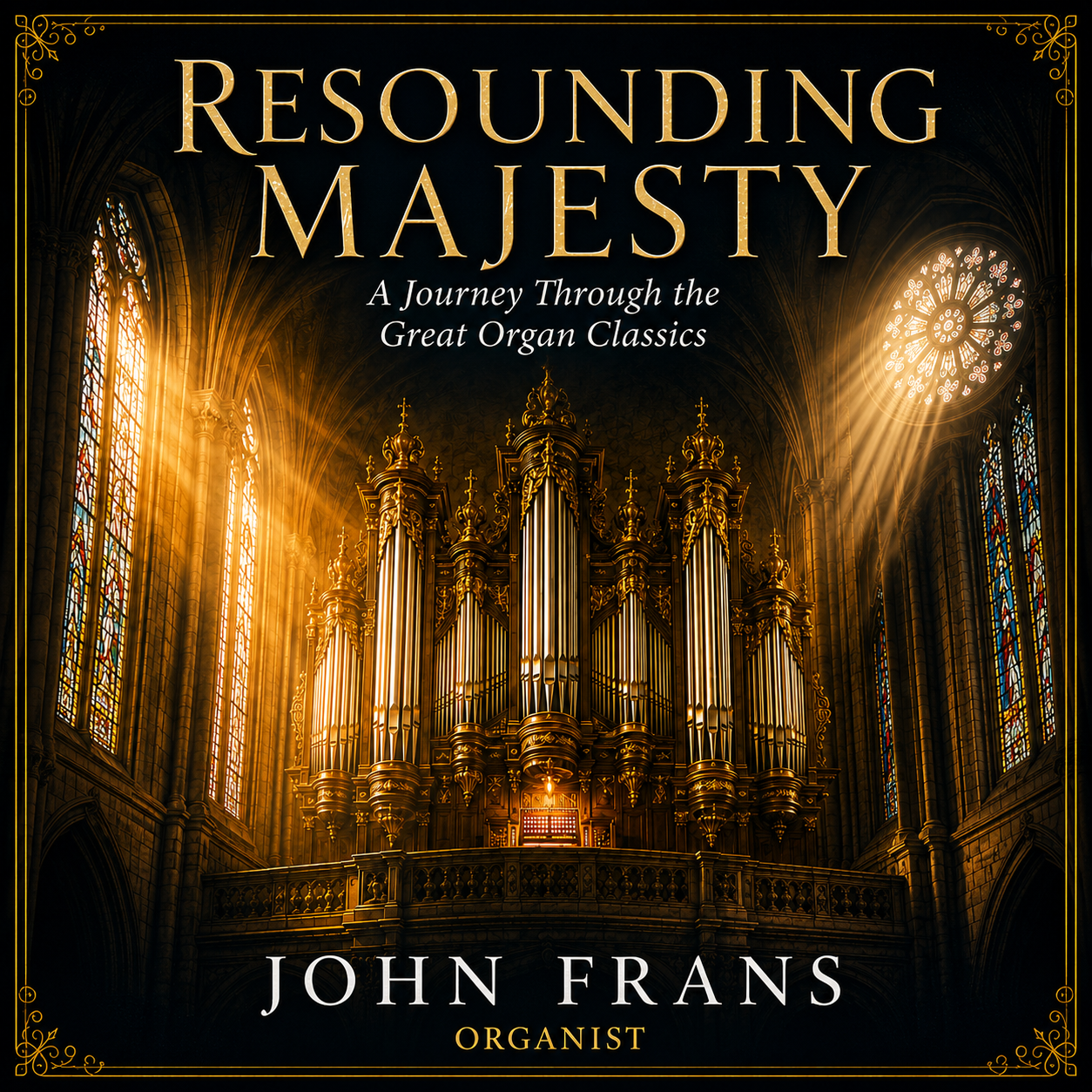
A Journey Through the Great Organ Classics — a 2026 recording shaped by reverence, persistence and a lifetime in sacred music.
The pipe organ as cathedral and chamber
There are moments when the organ does more than fill a space. It transforms it.
In Resounding Majesty, John Frans approaches the instrument as a storyteller. Each phrase shapes an architectural landscape of sound; each registration is chosen for colour, depth and emotion. Thunderous proclamation and whispered meditation coexist, but power is never the only purpose. Within the organ’s grandeur lies tenderness.
To purchase Resounding Majesty, email John at jfrans12@icloud.com.
Email John to purchaseJohn began working on the album after retiring from his corporate career. What started during load shedding became a six-year undertaking.
The project demanded patience, persistence and many hours of work. In John’s own account, it became one of the most rewarding projects he had ever undertaken. Its long gestation is part of the recording’s meaning: not a quick recital document, but the culmination of decades spent listening to, playing and serving sacred music.
The repertoire deliberately travels between brilliance and repose. The organ is allowed to proclaim, sing, whisper and finally recede into stillness.
Barry Smith, one of John Frans’s principal mentors, guided him — and many others — through the world of sacred music. John remembers many childhood hours spent listening with him to favourite organ solos. In later years, both found themselves bringing church music to others.
The album honours that enduring influence, mentorship and tireless contribution to sacred music.
Music has always been both refuge and proclamation for me.
The organ can fill a vast space with splendour. It can also speak intimately to the quietest corners of the soul. In preparing this recording, my intention was not only to present the grandeur of the instrument. I also wanted to reveal its humanity — its warmth, tenderness, vulnerability and extraordinary power to inspire.
Each work has been shaped with care. My hope is that these performances offer moments of reflection, courage and quiet joy.
May this music accompany you in celebration, contemplation and peace.
Dedication to the listener:
To all who find solace in sound, strength in stillness and hope in harmony. To the spaces that have carried these echoes, and to the hearts that continue to listen.
The corrected twelve-track booklet places each work inside the emotional arc of the album.
Hollins opens the album with radiant poise. The trumpet voice balances courtly refinement with ceremonial brilliance. Bright articulation and noble clarity give the programme an elegant, confident beginning.
Franck’s First Choral unfolds like spiritual architecture in sound. Its themes grow through reflection, contrast and transformation; rich harmonies move from searching introspection towards luminous affirmation.
Bach’s Badinerie dances with agility, wit and momentum. Originally written for orchestra, its quicksilver lines take on a brilliant new character at the organ, kept buoyant and precise by crisp articulation.
A flowing accompaniment supports one of Bach’s most familiar chorale melodies. Gentle, assured and quietly radiant, it offers repose, warmth and inward peace.
This chorale prelude is shaped by humility and supplication. Bach sets the melody in a deeply expressive texture, allowing each phrase to breathe with tenderness; the result is intimate, prayerful and quietly consoling.
Parry’s chorale prelude unfolds with warmth and measured grace. Its restrained character suggests the stillness of evening; the music glows rather than dazzles, offering a calm space for reflection.
Cocker’s celebrated work gives the organ’s tuba stop a commanding role. The melody is bold, dignified and ceremonial, with brilliance balanced by firm structure, rhythmic vitality and careful proportion.
This Schübler Chorale is Bach’s organ arrangement of a movement from Cantata BWV 140. A flowing inner line supports the noble chorale melody, creating a mood that is serene, watchful and filled with calm expectancy.
The final movement of Boëllmann’s Suite gothique surges forward with rhythmic energy. Repeated figures create urgency and momentum while the writing remains clear and controlled, building towards an exhilarating conclusion.
Mendelssohn combines classical clarity with Romantic warmth. Solemn opening ideas give way to lyricism, energy and contrapuntal strength, bringing depth, balance and quiet authority to the programme.
Widor’s famous Toccata forms the final movement of his Fifth Organ Symphony. Rapid manual figures shimmer above a powerful pedal foundation as the music rises towards a triumphant proclamation of light, grandeur and celebration.
The Swan glides with unhurried grace. In Alexandre Guilmant’s organ transcription, Saint-Saëns’s melody sings with tenderness and simplicity. The album ends not in thunder, but in stillness, its final resonance suspended beyond the closing note.
A South African organist, conductor and mentor whose musical voice is rooted in the grandeur of the pipe organ and a deep love of sacred tradition.
His playing combines discipline and devotion with a sensitive understanding of space, resonance, colour and atmosphere. He draws orchestral colour from the instrument and allows it to sing, whisper and proclaim. Through performance, choral leadership and mentorship, his work remains committed to musical excellence within the church and the wider cultural community.
The full corrected twelve-track booklet contains the album introduction, dedication, artist biography, personal note and programme notes.